Using a shipping container as a feed room on a Mississippi cattle or poultry farm
Yes, as long as it is vented: a steel box keeps rain, raccoons and rats away from feed better than any wood shed, but a sealed one sweats when the temperature swings and wet feed cakes. Two screened louvered vents, one low and one high on opposite walls, keep air moving with no power, and that is the difference between a feed room and a problem.
Why a container for feed
Feed on a barn floor draws rats, takes on damp, and goes to waste in the corner nobody sweeps. A container's floor sits above the mud, the walls are steel, and the doors close tight enough that a raccoon cannot work them. It locks too, which matters for the medicine shelf.
A 20ft is the usual size: roughly a pallet and a half of bagged feed with shelving down one wall for minerals, meds and small bags, and room to walk. It fits next to the barn or at the far pasture gate where the feed truck stops. For more volume, the same layout works in a 40ft with a second set of vents.
Ventilation is the whole trick
South Mississippi swings from cool nights to hot afternoons, and a sealed steel box sweats on every swing. Two louvered vents, one low on one wall and one high on the opposite wall, let air flow through on its own. The bug screens keep the wasps out. That is why the vents are part of the package and not optional; container condensation explains the physics.
Keep feed bagged or in bins. A used container carried dry goods; it is swept, not sanitized, so treat it like any barn room. The plan set's cross-section sheet draws the airflow and the shelf heights.
Setting it on pasture ground
Pasture ground moves after the first wet month, and doors that were square on delivery day start to bind. A 6-ton bottle jack and a few blocks let you re-level the box yourself; it is part of the package for that reason. A gravel pad or a packed gate area is the best base, not fresh fill.
The truck needs about 60 feet of straight, firm run for a 20ft. Measure from the gate before you order, and see container on grass for what holds up under a loaded box. The tack room and hay bay use the same vent layout.
The layout, drawn to the box
This is sheet 2 of the free Farm Feed Room plan set: the 20ft standard container drawn from real ISO dimensions, with every shelf, rack and opening placed. Two pallets of feed by the doors, shelving for minerals and meds, sealed cans for opened bags, two louvered vents set low-in, high-out.
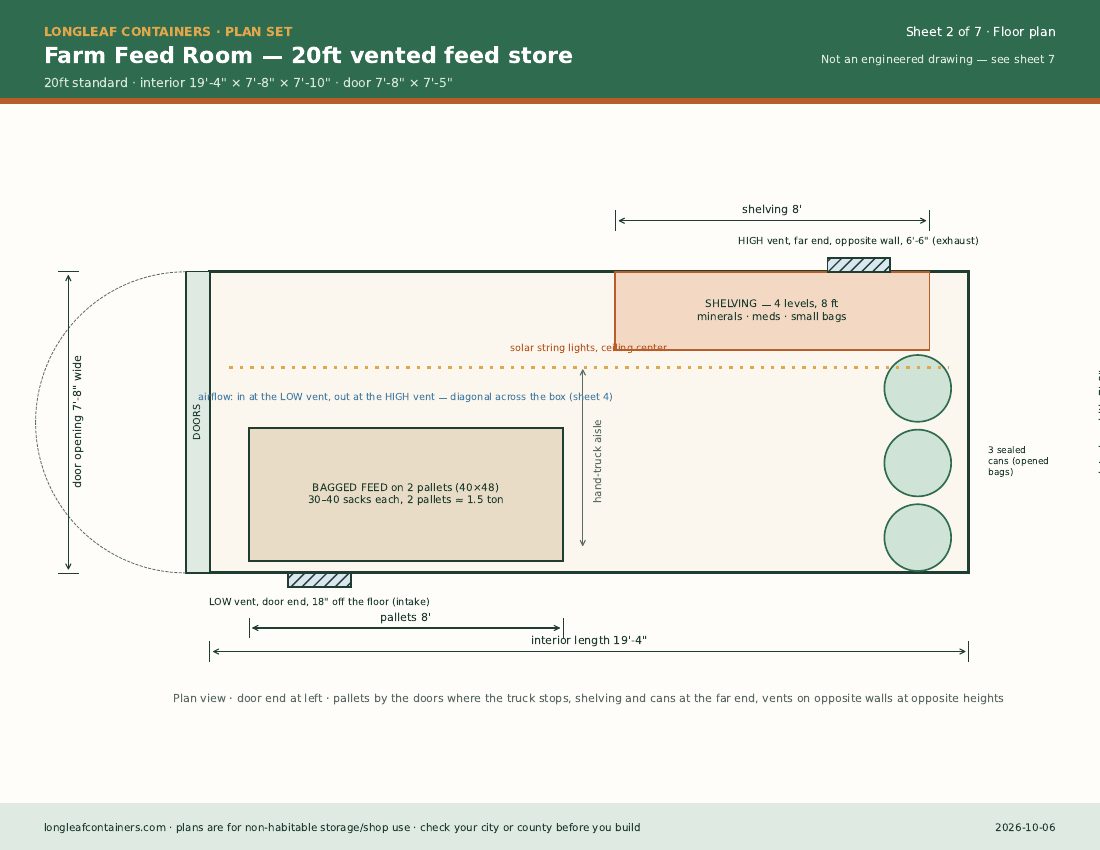
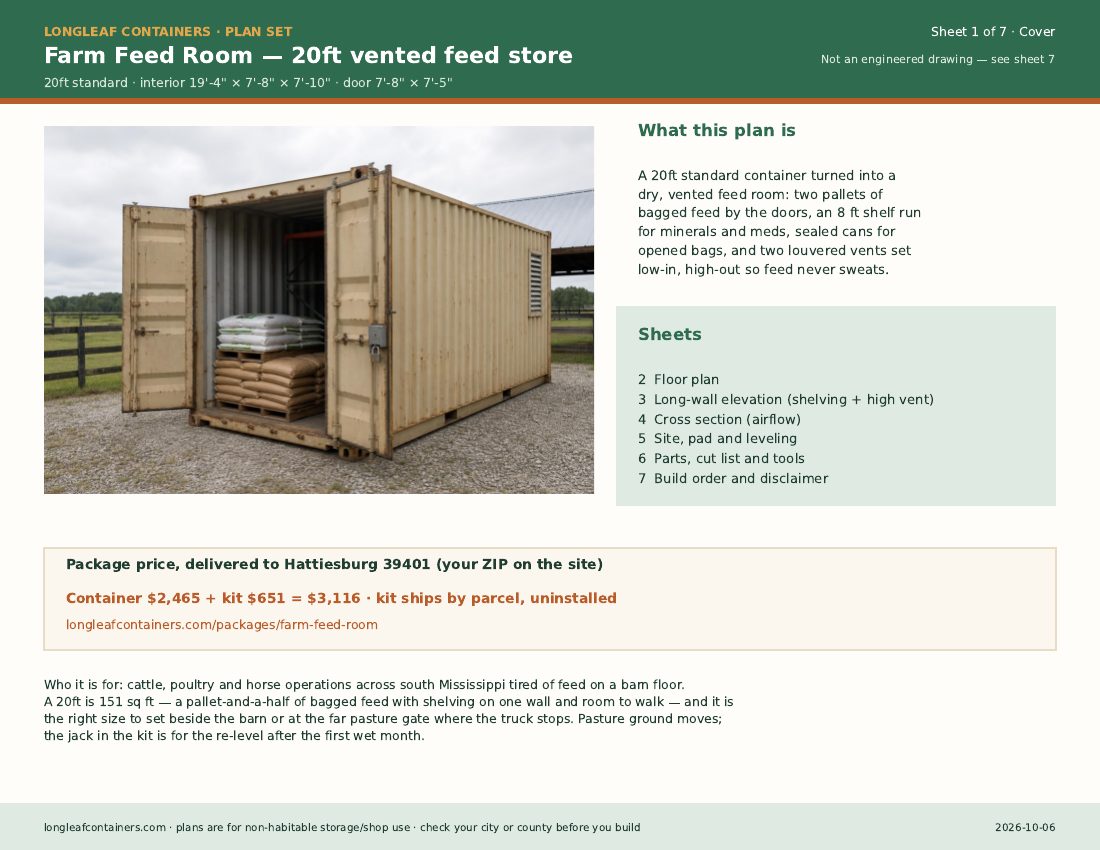
All seven sheets: Cover and package price · Floor plan · Long-wall elevation: shelving and the high vent · Cross section: airflow · Site, pad and leveling · Parts, cut list and tools · Build order and disclaimer. You buy locally: four 2x12s, pallets, three galvanized cans, corner blocks — roughly $230–$320.
See the Farm Feed Room package — container and kit, delivered price by ZIP →
Buying a container?
Longleaf sells used and one-trip 20ft and 40ft shipping containers, delivered by tilt-bed across the Pine Belt. Enter your ZIP for the delivered price — it comes straight from the supplier feed and already includes the haul. Locks, vents, shelving and lights are on the accessories page. We sell; we do not rent.
Keep reading
- How to turn a shipping container into a hunting camp gear room in Mississippi — A shipping container as a hunting camp gear room in Mississippi: lock box, solar lights, shelving, a vent, a hook wall, and getting the truck up the camp road.
- A shipping container workshop in the Pine Belt: lights, shelving, power and the door question — How to set up a 40ft shipping container as a workshop in the Pine Belt: solar lights, no-drill shelving, one cord in for power, leveling, and the door choice.
- Setting up a container for storm season on the Mississippi Gulf Coast: lock, level, vent — Setting up a 20ft container for storm-season storage on the Mississippi Gulf Coast: where to set it, loading, lock box, vents, leveling and when anchors apply.
- A container tack room for a Lamar County barn: saddle racks, vents and the layout — How to set up a 20ft shipping container as a tack room in south Mississippi: saddle racks from 2x6s, two vents against mildew, shelving, and where to set it.
- Using a container for business inventory — Shipping container for business inventory: what stock a container you own genuinely suits, where a warehouse bay beats it, and keeping stock dry and countable.
Across the Pine Belt
Hattiesburg · Petal · Laurel · Ellisville · Purvis · Sumrall · Columbia · Collins · Seminary · Wiggins